Jens Szymanska · Consultancy · Hands-on since 1986
Vulcanization, rebuilt
from the inside out.
Thirty-eight years in natural latex foam — from Dunlop's steam chambers to a high-frequency process, proven across four plants, that cures a mattress core in minutes, not an hour.
The problem with steam
Most of what you're heating is air.
The Dunlop process hasn't changed much since 1929. Here's what it actually takes to cure one US Queen mattress core the old way.
The latex compound is foamed with air, poured into a pinned metal mold, and vulcanized in a steam chamber. The pins exist purely to solve a heat-transfer problem: steam heats the mold's surface, and that energy then has to crawl inward, through metal, until the foam at the core finally reaches its ~100°C curing temperature.
Up to a ton or more of metal, heated to cure sixty kilos of foam. That's why conventional plants need heavy support structures, slow mold changeovers, and long cycle times — and why shapes, sizes and product features stay conservative.
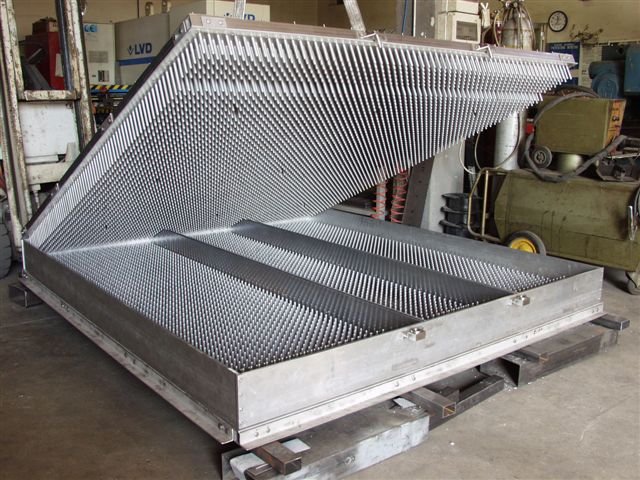
An old Dunlop steam-vulcanization mold, opened — pins run across the entire panel to move heat inward from the surface.
The invention
Heat the water, not the metal.
High-frequency energy excites the water molecules already inside the latex foam directly, by their dipole character — no metal in the way, no thermal lag.
Fig. 1
Old Dunlop steam process
Standardized 1929, DUNLOPILLO GB — still the industry default
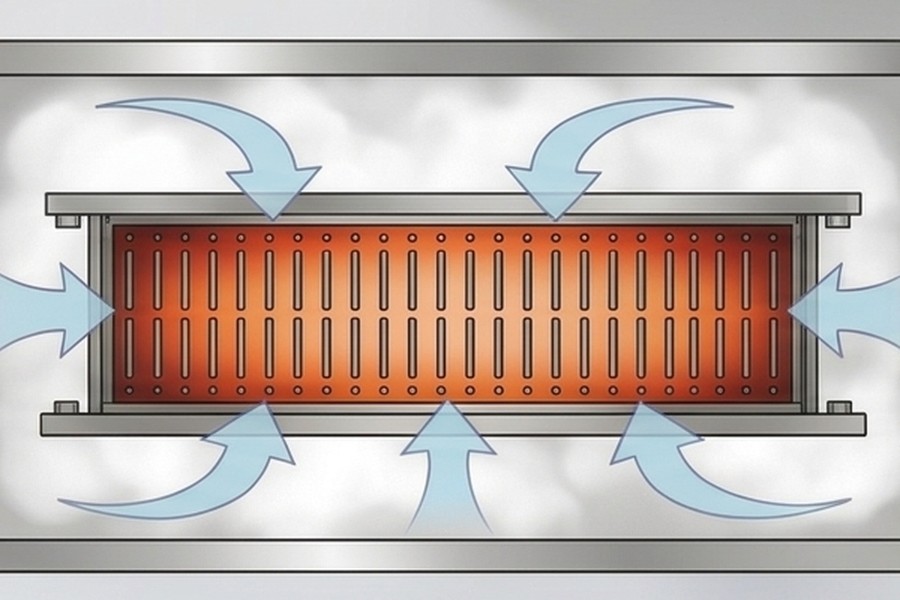
Fig. 2
High-frequency vulcanization
Invented by Jens Szymanska, 2003 · first plant: Indonesia
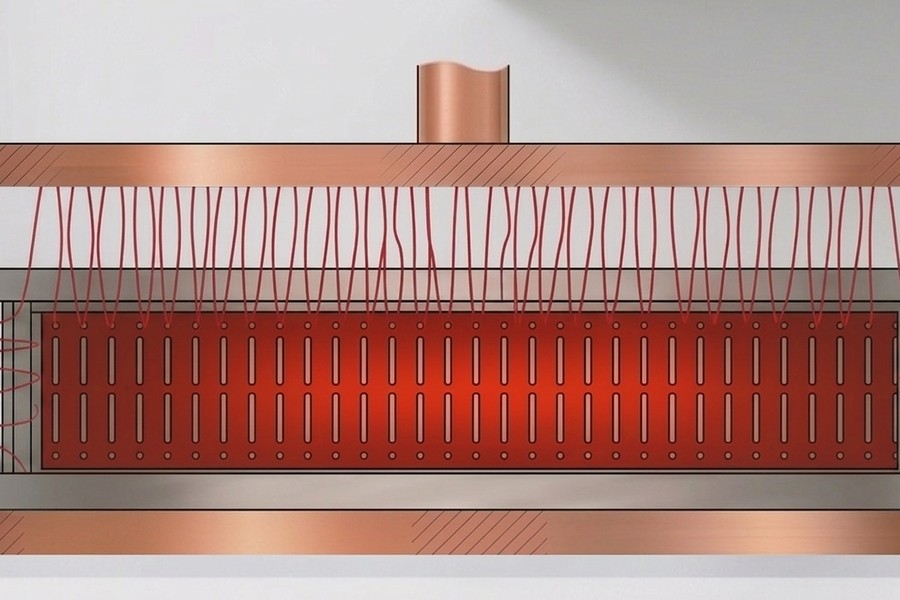
Fig. 1 → Fig. 2 — same chemistry, sulphur cross-linking of rubber molecules. Different physics.
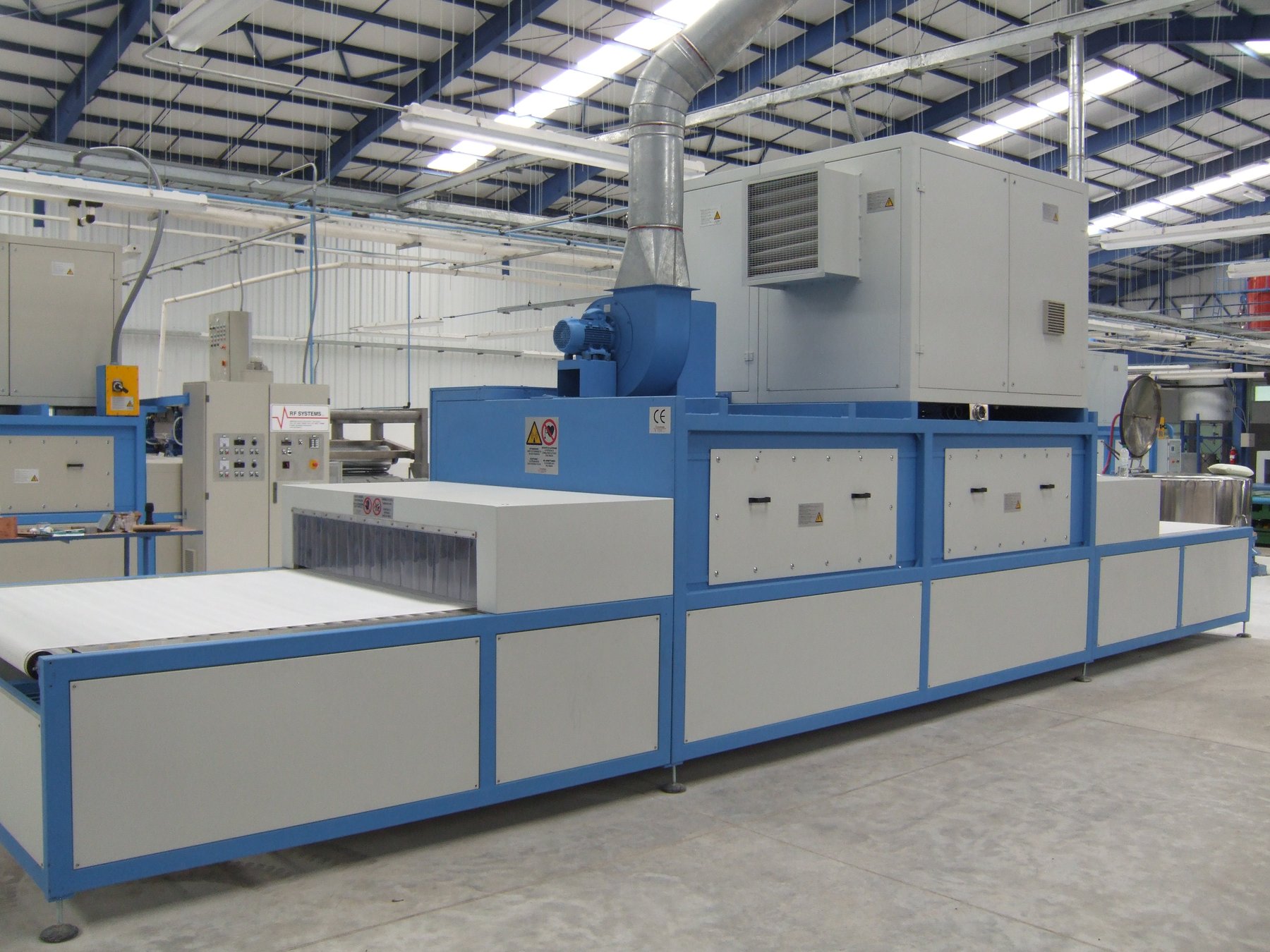
The actual machine — RF vulcanization tunnel, Guatemala.
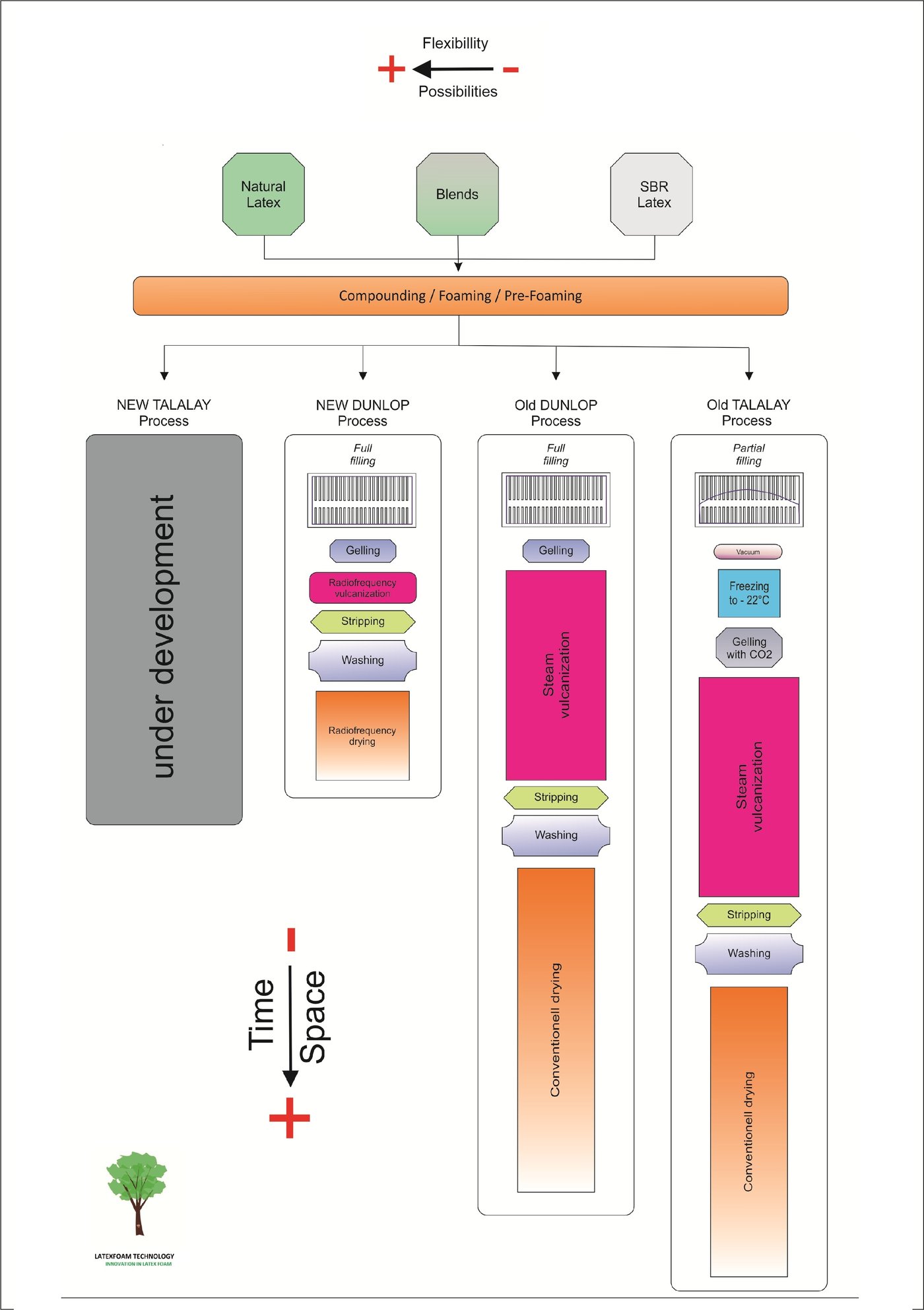
The full picture — all four production paths compared: steam and RF versions of Dunlop, and the classic and CO₂-free versions of Talalay.
What changes on the factory floor
Minutes instead of an hour, and a lighter building around it.
High energy savingNo ton of metal to heat for every cure cycle.
Export product qualityEven, predictable curing through the whole core.
Reduced space requirementsLighter molds, lighter structure, smaller footprint.
Flexibility in shapes & sizesMolds are fast to open, close and swap.
New designs & featuresErgonomic zoning, channelled aromatherapy cores, and other details become practical, not just theoretical.
Faster reaction to marketShorter cycles mean shorter lead times on new lines.
Faster ROILess energy and floor space per unit produced.
Higher profitLower running cost per mattress, pillow or topper.
In-house mold manufacturingLighter tooling you can build and iterate on-site.
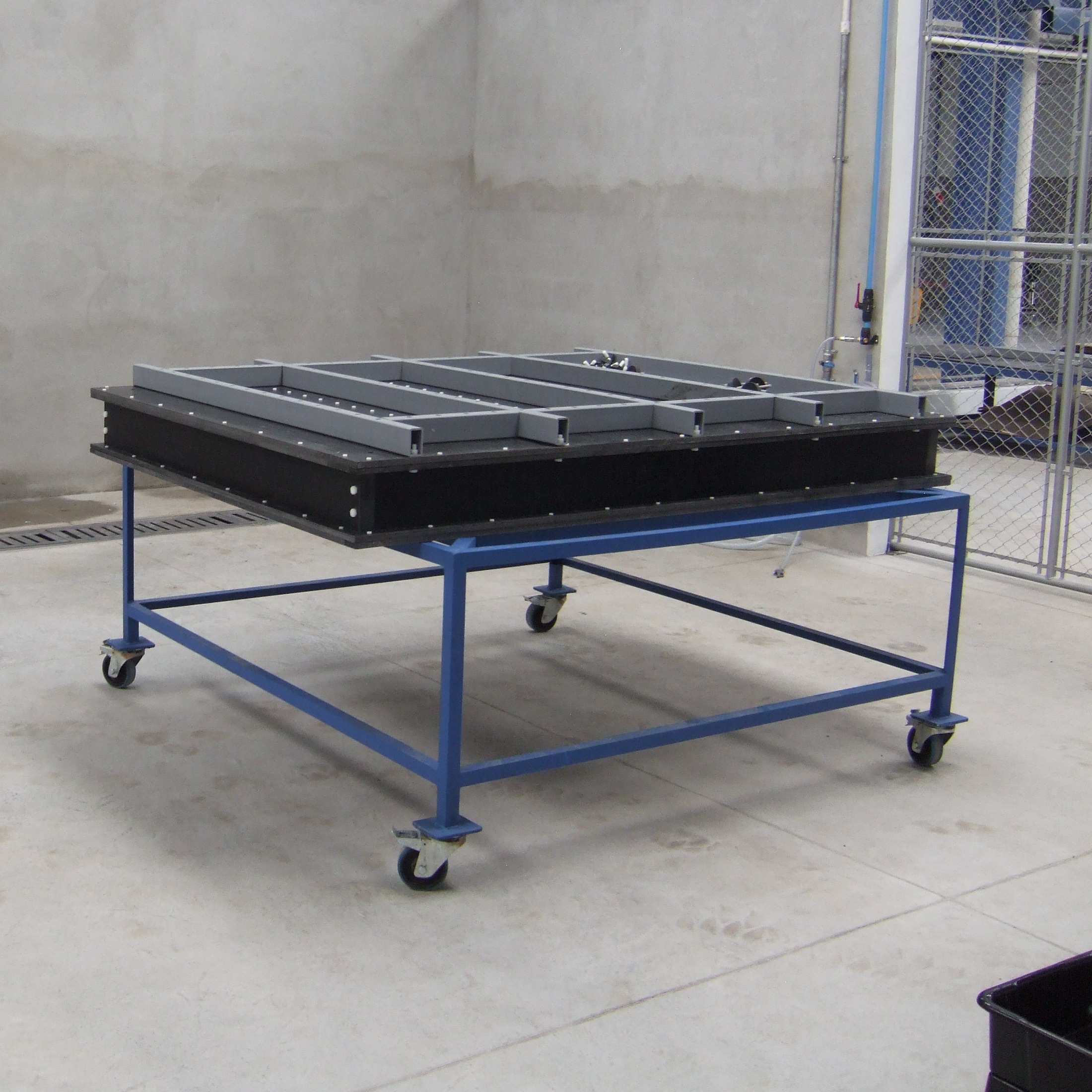
An early lightweight mold cart, built in-house in Guatemala — mobile, and a fraction of the weight of a conventional metal pin-mold. Since refined into current tooling.
Thirty-eight years in the industry
From futons to four production plants.
Japanese futons arrive in Germany
Started production of cotton futon mats, then began layering in latex foam — 2 cm, then 6, then a full 10 cm core with fibre on top.
First trip to Asia
Went to investigate natural latex foam directly, at a time the European bedding industry barely distinguished it from synthetic. The trip that set the direction for everything after.
Co-founded QuL e.V.
With the ECO Institute in Cologne — the Quality Association for Environmentally-Agreeable Latex Mattresses.
Dames-Willers GmbH, Bremen
Thirteen years responsible for budgeting, planning, export and erection of latex foam plants worldwide.
The Sri Lanka Plant and the Idea for High-Frequency Vulcanization
Vulcanization was still steam-based, but drying was already based on radio frequency technology. This was the initial impetus to develop a new vulcanization process with the corresponding tools.
Indonesia: first RF plant in the world
The new high-frequency process went into full production for the first time in the world.
Guatemala, two lines
Separate production lines for pillows and for mattress cores, both on RF vulcanization AND RF drying.
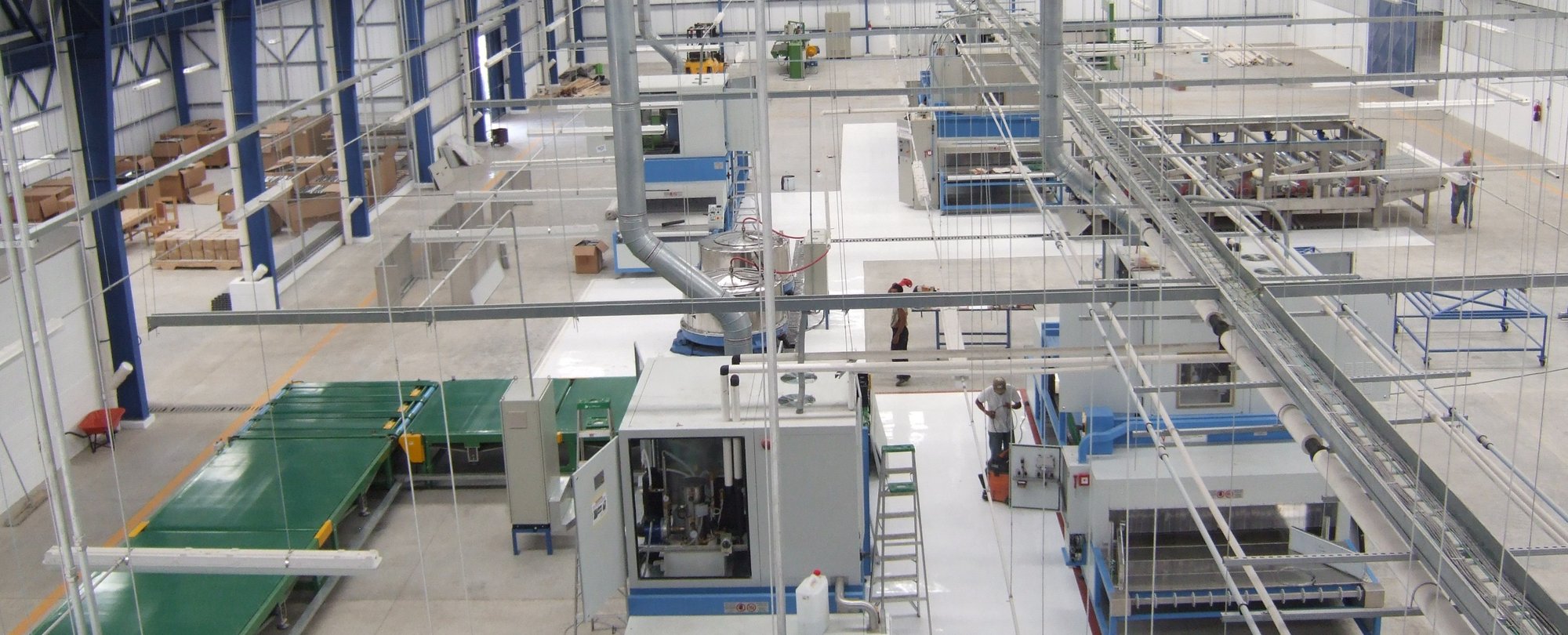
The Guatemala plant floor, during set-up.
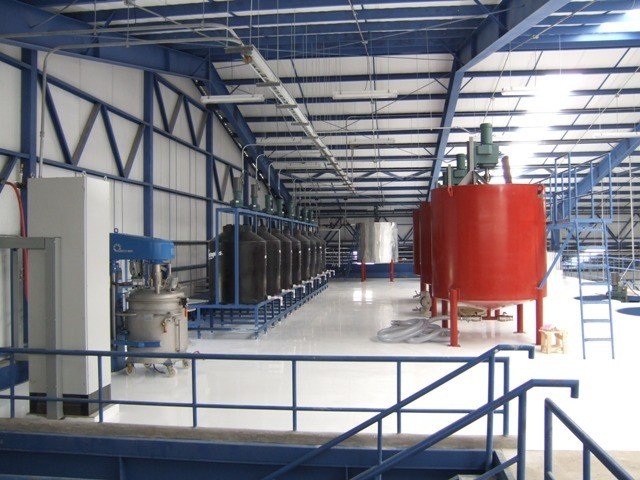
Compounding section.
Independent consultant & inventor
Free-standing work across the industry, entrepreneurial projects, further development of the process.
Malaysia
Brought in to help set up a new factory producing mattresses and pillows — a line built for a customer who wanted standard pinhole foam, produced with RF instead of steam.
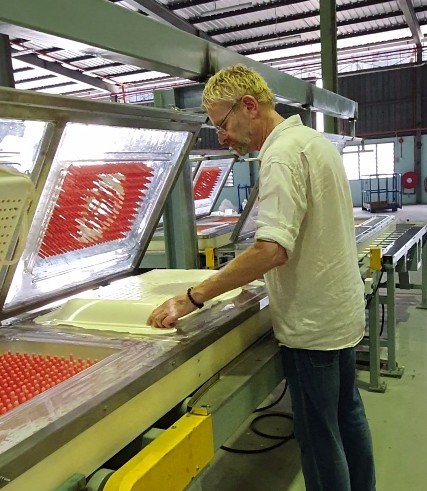
On the line, trial run, Malaysia.
Talalay without CO₂ or freezing
Latest development: a working sample of Talalay-style foam that skips the usual CO₂ and freezing steps entirely.
Currently in development
Talalay foam, without the CO₂ and freezing steps.
The classic Talalay process relies on vacuum expansion followed by CO₂ gelling and a deep-freeze cycle. The latest work in this lab removes that entirely — same open, consistent cell structure, a simpler production chain.
Independently verified
Third-party test results, not just claims.
Foam from a plant built on this process, tested by independent German labs.
eco-INSTITUT-Label
Latex core tested for VOCs, formaldehyde, nitrosamines and odour under DIN EN ISO 16000. Awarded the eco-INSTITUT-Label in full.
View full test report (PDF) →Durability & Resilience Test
Latex mattress core roller-tested per DIN EN 1957 across 60,000 strokes in two stages — well above the threshold for an increased quality level, with no visible damage after test.
View full test report (PDF) →Let's talk
Bring RF vulcanization into your factory.
Consultancy, plant setup, mold design, and process troubleshooting — for manufacturers who want more out of a cure cycle than steam can give them.
Message on WhatsApp — +49 152 3185 2629